The information you provide to the chat will be recorded to improve your experience and to contact you. Please read our privacy notice to see how we are processing and protecting your data. Click to view our Cookie Notice.
We'd love your feedback—take a quick survey to help us improve.
How can we help you today?



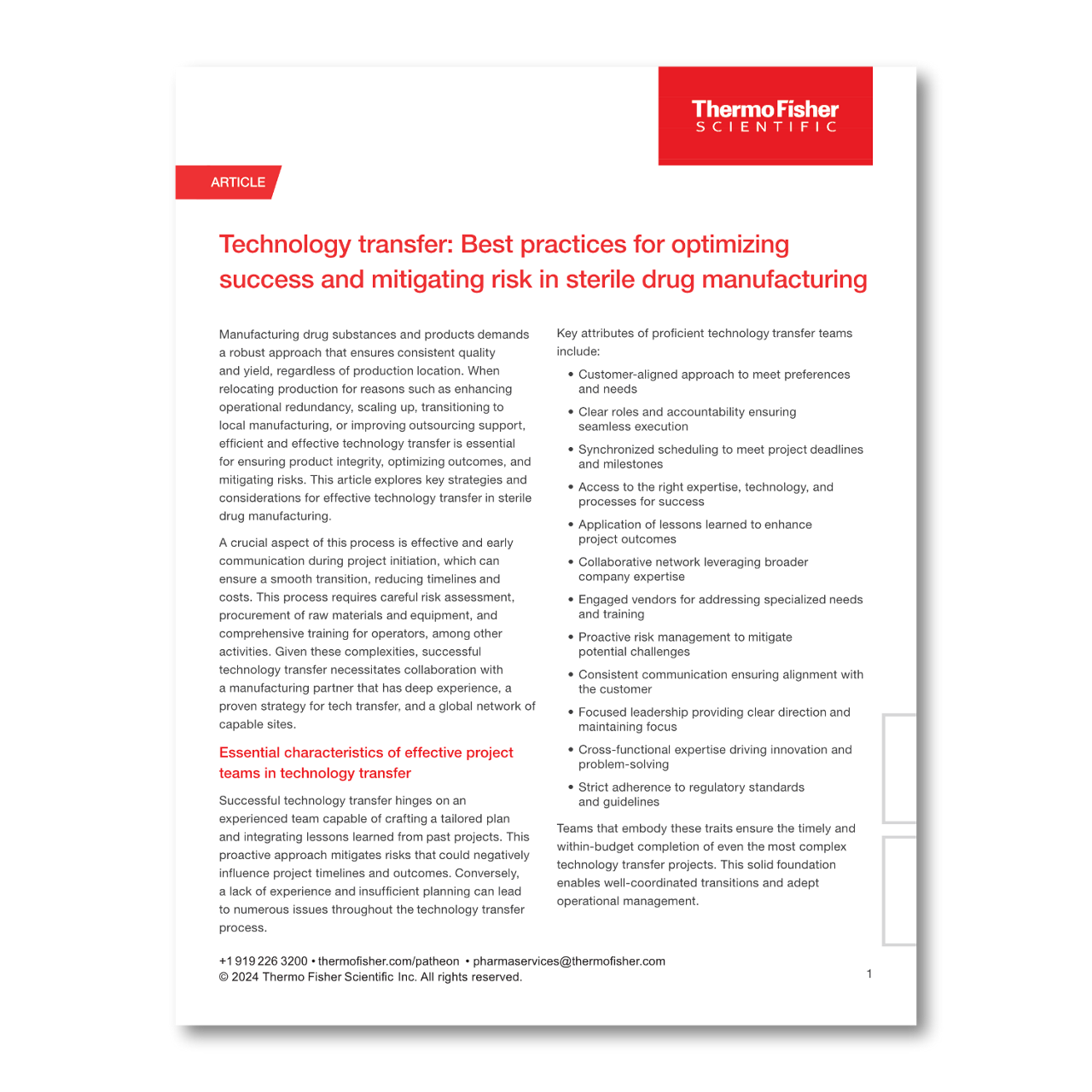
Technology transfer: Best practices for optimizing success and mitigating risk in sterile drug manufacturing
This article outlines best practices for technology transfer in sterile drug manufacturing, with a focus on reducing risk, maintaining product quality, and supporting regulatory readiness.
Technology transfer for sterile drug manufacturing is a complex, high-risk process that requires close coordination across development, manufacturing, quality, and regulatory teams. Clear documentation, strong process understanding, and proactive communication are essential to ensure knowledge is transferred effectively while maintaining control of aseptic processes and compliance as programs move between sites or stages.
Best practices for sterile drug manufacturing tech transfer
Key best practices include:
- Establishing a cross-functional tech transfer team with clearly defined roles and responsibilities
- Developing comprehensive transfer documentation, including process descriptions, control strategies, and critical quality attributes
- Performing early risk assessments to identify potential gaps related to equipment, facilities, or analytical methods
- Aligning on aseptic processing requirements, including environmental controls, contamination prevention, and operator training
- Supporting knowledge continuity through structured handovers, training, and collaborative engagement between sending and receiving sites
Why effective tech transfer matters in sterile manufacturing
Effective tech transfer helps minimize delays, reduce quality risks, and support regulatory confidence during scale-up or site changes. In sterile drug manufacturing, disciplined transfer practices are critical to maintaining product integrity and protecting patients as programs advance.