

The critical role of cold chain logistics: Safeguarding drug integrity from lab to patient
Author:
Thermo Fisher Scientific Content Team
Category | Large molecule
Key takeaways
- Pharmaceutical formulation development determines drug stability, bioavailability, and patient usability.
- Successful drug formulation development balances molecular properties, patient-centric design, and finished product quality.
- A structured formulation development process reduces downstream manufacturing and regulatory risk.
- Early formulation strategy decisions influence clinical success and commercial scalability.
Cold chain logistics plays a foundational role in modern pharmaceutical development and distribution. As drug pipelines increasingly include biologics, vaccines, and cell and gene therapies, maintaining precise temperature control has become essential to protecting product integrity and ensuring patients receive safe and effective medicines.
As the demand for temperature-sensitive therapies rises, robust cold chain logistics have become essential to ensuring product safety and efficacy. Even brief temperature deviations can compromise these drugs, leading to costly recalls, wasted resources, and risks to patient safety. According to the World Health Organization (WHO), nearly 50% of vaccines are wasted annually due to improper temperature management [1]. Furthermore, the global cost of pharmaceutical cold chain failures is estimated at $35 billion annually [2].
Why are biopharmaceuticals temperature sensitive?
Biopharmaceuticals are temperature sensitive because their complex molecular structures can undergo irreversible changes when exposed to temperature fluctuations. Large molecule drugs such as monoclonal antibodies are especially vulnerable; unlike small molecule drugs that are generally stable at room temperature, large molecules can experience denaturation or aggregation when exposed to heat or freezing. These structural changes compromise stability, potency, and safety, making continuous temperature control essential throughout the supply chain.
Even small temperature fluctuations can negatively impact the stability of these drugs. Excess heat can cause a biologic to lose its ability to bind to its target, while freezing may cause ice crystals to form, damaging the drug’s molecular structure. Robust temperature control systems help prevent these issues and preserve the safety and efficacy of the product. If temperature integrity is compromised at any point, the drug can become ineffective, posing a significant risk to patients.
What temperature ranges are commonly used in pharmaceutical cold chains?
The cold and ultracold supply chain is typically divided into three categories—refrigerated, frozen, and cryogenic—each designed to protect drugs at different temperature ranges, as described below:
- Refrigerated: Many drugs, such as vaccines and monoclonal antibodies, need to stay between 2°C and 8°C (36°F to 46°F) to maintain their efficacy. Any temperature fluctuation outside this range could cause issues.
- Frozen: Some drugs require storage below 0°C (32°F), typically between -20°C and -80°C (-4°F to -112°F). Even small changes in temperature can compromise the drug’s integrity, so careful and consistent monitoring is critical.
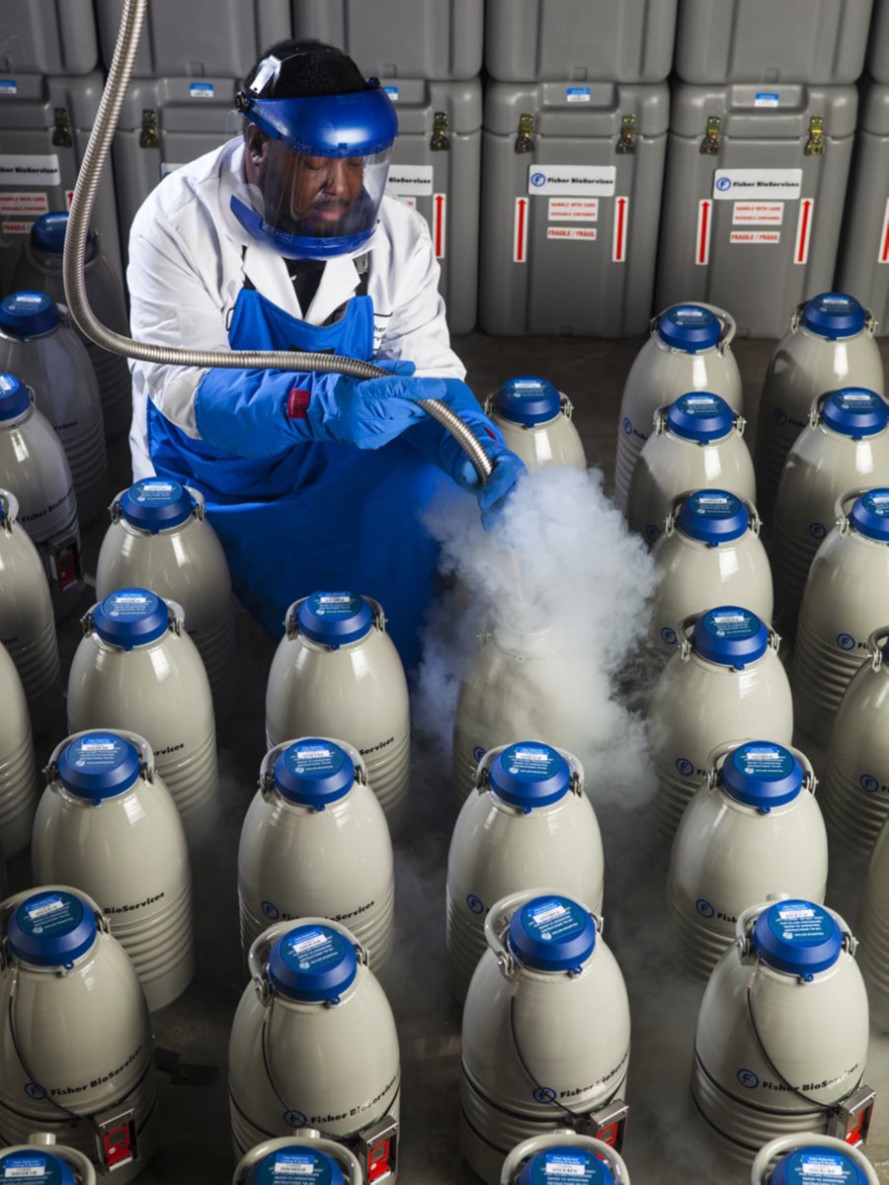
- Cryogenic: Other drugs, like certain cell and gene therapies, need extremely low temperatures, usually below -150°C (-238°F). To keep them stable, they’re stored using liquid nitrogen in specialized containers.
What are the key challenges in cold chain logistics?
Cold and ultracold supply chains can be difficult for drug sponsors to manage, particularly when they have other development priorities to deal with. Beyond the obvious issue of temperature control during production, storage, and distribution, additional challenges include:
- Regulatory compliance: Navigating different rules across countries can be challenging. Regulations can change frequently, and drug developers need to stay on top of these to ensure the safety and efficacy of their products in global markets.
- Logistical hurdles: Cold chain transport usually involves a mix of air, sea, and ground travel, with many handlers along the way. Delays or changes at any point can jeopardize product quality, making real-time monitoring and close coordination key.
- Cost and infrastructure: Cold and ultracold storage often requires expensive, specialized equipment. Maintaining this infrastructure can be particularly difficult in remote or underdeveloped regions, which can strain already tight resources.
What innovations are improving cold chain logistics?
Recent advancements in cold and ultracold supply chain logistics have made it easier to maintain the temperatures required for sensitive biopharma products. Technologies such as in-transit temperature monitoring and reporting systems enable continuous tracking of critical shipments in one centralized platform, allowing real-time visibility into delays or excursions and supporting data-driven decision-making. Smart sensors provide another layer of security, detecting potential temperature fluctuations early and enabling quick action to prevent product damage.
Applying best practices in packaging and labeling further strengthens cold chain management. For instance, ensuring the right-first-time packaging and labeling of biopharma products at ultracold temperatures with zero time out of environment (TOE) is essential. Additionally, labels must adhere reliably in these conditions—an ongoing challenge in the biopharma industry, where proper labeling is critical for compliance. Managing cold chain logistics goes beyond just fridges and freezers; it involves a comprehensive suite of services and solutions to safeguard medical materials.
Why partner with a CDMO for cold chain logistics and management?
Partnering with a CDMO for cold chain management helps mitigate risk and ensures temperature-sensitive products reach patients safely. Specialized partners provide validated infrastructure, regulatory expertise, and global logistics capabilities that many drug developers cannot efficiently maintain in-house.
The reputation of biotechnology and pharmaceutical companies depends on their ability to deliver safe and effective therapies. Experienced CDMO partners support this goal by managing cold chain complexity across manufacturing, storage, and distribution, allowing sponsors to focus on advancing their therapies while safeguarding product integrity.
Thermo Fisher Scientific offers integrated CDMO and CRO solutions to support cold chain management, ensuring temperature-sensitive therapies are handled with care. Collaboration with logistics providers, technology experts, and regulatory professionals creates a seamless global network of facilities designed to meet client needs. This approach, along with biorepository services for long-term sample storage, helps safeguard drug integrity from lab to patient.
Summary
CROs, CMOs, and CDMOs can all support drug development—often with some overlap—but they differ in primary focus: clinical research (CRO), manufacturing (CMO), and integrated development and manufacturing (CDMO). An integrated CDMO and CRO model may also be beneficial, especially for programs seeking fewer handoffs and more connected execution across clinical research, manufacturing, and clinical supply.
Frequently asked questions about cold chain logistics
Cold chain logistics is the temperature-controlled system used to store, handle, and transport pharmaceutical products within defined temperature ranges. It ensures that temperature-sensitive drugs maintain their safety, quality, and efficacy from manufacturing through delivery to patients.
Many pharmaceutical products are highly sensitive to temperature changes. Without proper cold chain management, drugs can lose potency, become unsafe, or fail to meet regulatory requirements, putting patients and manufacturers at risk.
Challenges such as equipment malfunctions, transportation delays, handling errors, or inadequate monitoring are common with cold chain logistics. Even brief temperature excursions can compromise product quality and lead to potential waste or recalls.
CDMO partners provide specialized infrastructure, experienced personnel, and integrated logistics services to manage cold chain requirements across clinical and commercial supply chains. This support reduces risk and improves consistency.
View references