The information you provide to the chat will be recorded to improve your experience and to contact you. Please read our privacy notice to see how we are processing and protecting your data. Click to view our Cookie Notice.
We'd love your feedback—take a quick survey to help us improve.
How can we help you today?

Translating Phase II success into Phase III readiness takes more than scale

By Thermo Fisher Scientific Content Team

Industry Perspectives
Originally published on BioPharma Dive on November 9, 2026.
Republished on Patheon.com with permission.

Positive Phase II results clear the way for Phase III development, but a successful transition involves far more than scaling up the clinical program.

Consider what can happen when a study expands into new countries. A market that looks promising based on patient availability may have a different standard of care that affects the protocol, requires additional drug sourcing, and introduces new supply and import requirements. What begins as a country-selection decision quickly becomes a clinical, regulatory, and supply decision as well.

That is the less obvious challenge of moving into Phase III. The study gets larger, certainly, with more patients, sites, countries, and investigational product. But the more consequential shift is how much more interconnected the development program becomes.

Country and site considerations, formulation and manufacturing requirements, supply complexity, and regulatory dependencies begin to converge. A decision in one area can create requirements or constraints in another.

Phase III readiness, then, is about more than whether the clinical evidence supports moving forward. It requires understanding what needs to change across the development program, which decisions depend on one another, and what can be put in motion before Phase II is complete.

Country selection has downstream consequences

As Phase III expands across countries, the criteria for where to conduct the study become more complex. Patient availability and enrollment potential matter, but they are only part of the decision.

Standard of care can vary considerably between countries, including which therapies patients receive, how those treatments are reimbursed, and whether they are readily available. Those differences can affect protocol feasibility, patient participation, and what medications may need to be sourced and provided as part of the study.

In some cases, there are ethical considerations as well. If patients routinely receive a therapy as standard of care in one country, the study plan needs to account for how that treatment will be provided and what happens when study participation ends.

Competition for patients adds another variable. A country with an attractive patient population and experienced sites may look very different when multiple trials are recruiting from the same pool. Treatment practices and protocol requirements can affect sourcing and supply, while each additional country brings its own regulatory, import, and export requirements.

The question, then, is not simply where patients can be found. It is where the study can be executed successfully once the full set of clinical, regulatory, and supply requirements is taken into account.

The product may need to evolve along with the clinical program

Phase III readiness can also require a fresh look at the investigational product itself.

A formulation appropriate for one population may not be appropriate for another. A program expanding from adults into pediatrics, for example, may require a different formulation. Emerging Phase II data may also inform dose or other product requirements for the pivotal study.

A change that sounds relatively contained can quickly extend into other parts of development. A new formulation may require additional development work, new or scaled batches, and changes to regulatory documentation.

Identifying these requirements late can put that work directly on the critical path. If a formulation change is still being defined as the Phase III study is being finalized, there may be little room to absorb the additional development and manufacturing work it requires.

Anticipating likely requirements creates more room to act. While Phase II is still underway, teams can identify the development and manufacturing work that may be needed and determine which activities can move forward with the information already available.

Some decisions will need to wait for additional evidence. Others can be advanced earlier, reducing the amount of work left to begin once the path to Phase III is clear.

Manufacturing has to scale, too

The same principle applies to manufacturing capacity.

A manufacturing strategy that is entirely appropriate for early clinical development may not be able to support the volume or requirements of a global Phase III program. Moving forward may require scaling into a different facility or transferring the process to another manufacturer.

A technology transfer or change in manufacturing strategy can also trigger regulatory updates. In the U.S., that can mean changes to the IND; in Europe, updates to the IMPD may be required. The CMC documentation needed to support those updates can also influence the timing of clinical regulatory submissions and study start-up.

This creates an opportunity to plan the work in parallel rather than sequentially. For example, regulatory drafts can advance against available information while final CMC source documents are being completed, reducing the amount of work left once the last critical input is available.

Clinical, regulatory, and manufacturing teams can align on critical inputs early, advance drafts as information becomes available, and prioritize the documents needed to keep the Phase III program moving.

Phase III readiness depends on more than having a manufacturing plan, a regulatory plan, and a clinical plan. Those plans need to account for where, and when, they depend on one another.

Prepare without getting ahead of the evidence

There is an understandable logic to treating Phase II and Phase III sequentially: complete the Phase II study, evaluate the results, make the go/no-go decision, and then prepare for Phase III.

But much of that preparation does not require waiting for the final Phase II readout.

Potential countries and sites can be evaluated, manufacturing capacity assessed, and formulation and regulatory requirements anticipated. Phase III protocol concepts and synopses can begin to take shape. Clear go/no-go criteria can also establish in advance what evidence will trigger the next set of decisions.

As Phase II data emerge, those plans can become more specific. Interim analyses may inform dosing and move the Phase III protocol closer to finalization. Clinical supply activities can be planned against anticipated regulatory milestones, including identifying where work can appropriately advance at risk to support earlier site activation.

The key is knowing which decisions genuinely depend on the evidence and which activities can responsibly move forward while the data are still emerging. That does not require assuming a positive Phase II outcome. It allows appropriate work to move forward while the evidence is still emerging, reducing what remains once the path to Phase III is clear.

Readiness depends on seeing the whole program

A program can be progressing within each individual function and still encounter delays where those functions meet. Preparing for Phase III therefore requires looking ahead while Phase II is still underway and asking what will need to be true across the development program if the data support moving forward.

Where might the formulation need to change? Can the manufacturing strategy support pivotal scale? Which countries make sense once standard of care, competition, supply, and regulatory requirements are considered together? What documentation will be needed, and when? Which activities can begin now, and which should remain contingent on the data?

These questions cannot be answered effectively in isolation. Clinical development, regulatory, manufacturing, and clinical supply decisions need to be made with an understanding of how they affect one another and where one activity depends on another.

That broader view creates room to make better-informed decisions earlier, preserve options where uncertainty remains, and address potential constraints before they disrupt the program.

Phase II success creates the opportunity to advance. Phase III readiness determines how prepared the broader development program is to take the next step.

Preparing for Phase III? Learn how Accelerator™ Drug Development brings clinical development and manufacturing together to help teams anticipate dependencies, coordinate critical activities, and prepare for what comes next.

Read the original article on BioPharma Dive.

Related insights and resources

Drug development and manufacturing is an ever-changing industry. Stay connected to new discoveries, innovations, and expert scientific opinions.

 

Industry Perspectives
Translating Phase II Success into Phase III Readiness
Explore how early planning across clinical development, manufacturing, regulatory and supply helps support a successful transition from Phase II to Phase III.
Case Study
Accelerating a complex global cardiovascular outcomes trial through coordinated execution
Learn how early alignment across CRO, clinical supply, and central laboratory capabilities helped keep a large global study on track as site activation and enrollment moved ahead of plan.
Webinar
Expert panel: Smarter clinical labeling for faster clinical trial startup
Discover how clinical trial teams can optimize label development, translation, and production to help streamline study startup and achieve first-patient-in (FPI) milestones faster.
Webinar
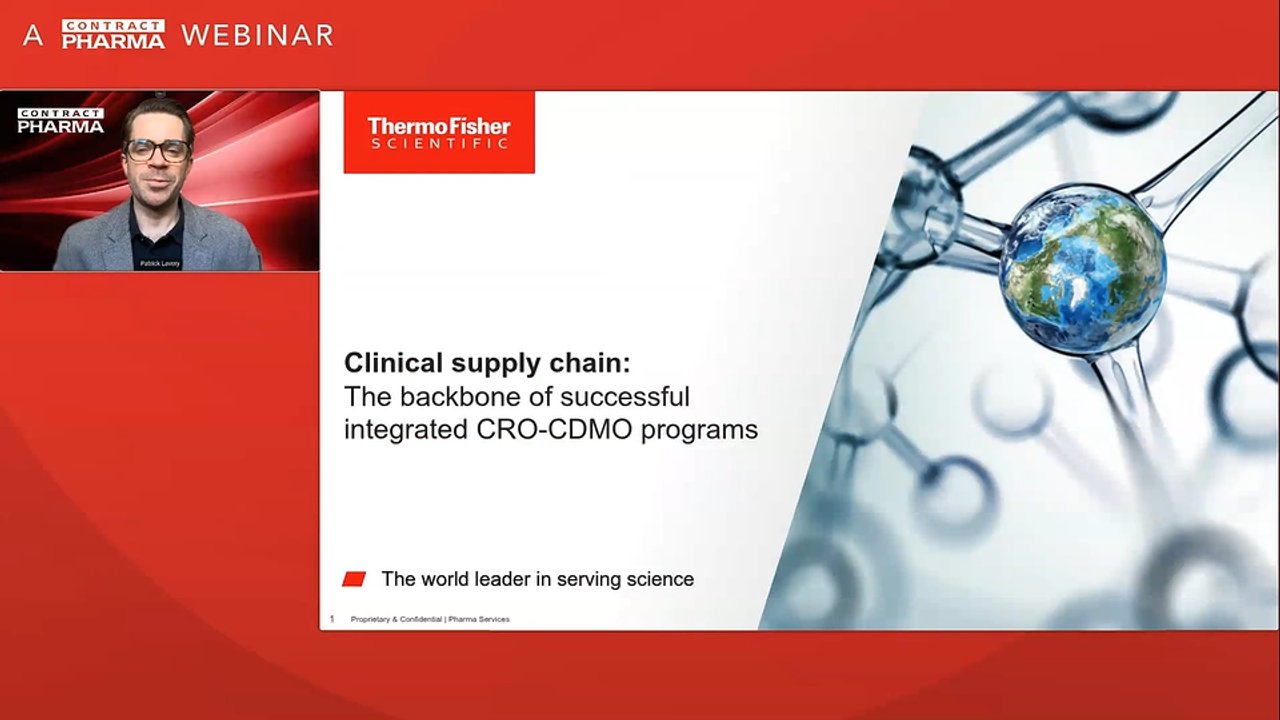
Clinical Supply Chain: The Backbone of Successful Integrated CRO-CDMO Programs
Watch this on-demand webinar to explore how the clinical supply chain connects development and clinical operations to enable coordinated execution across integrated CRO-CDMO programs.
Case Study
Turning rapid study start-up into enrollment momentum
Explore how coordinated planning across clinical operations, IP supply, and labs helped a large global rare cardiovascular outcomes trial reach start-up and enrollment milestones ahead of plan.
Event
Biotech Outsourcing Strategies (BOS) Manchester 2026
Visit our team at BOS Manchester, booth #19, to learn how Accelerator™ Drug Development can help streamline drug development programs from early development through clinical supply.
Video
The role of enabling technologies in transforming drug development: Expert insight series
Go inside Accelerator™ Drug Development to discover how enabling technologies such as AI-powered analytics are transforming drug development by connecting teams, data, and workflows.
Video
How integration helps overcome common outsourcing inefficiencies: Expert insight series
Go inside Accelerator™ Drug Development to discover how an integrated outsourcing model helps overcome inefficiencies caused by fragmentation, enabling development teams to move faster.
Video
Prioritizing scalability early on is key to successful drug development: Expert insight series
Go inside Accelerator™ Drug Development to discover why building a robust, scalable strategy from the early phases of biotech and pharma development programs is essential to long-term success.
Video
Successful clinical trial execution begins with an end-to-end strategy: Expert insight series
Go inside Accelerator™ Drug Development to discover why successful clinical trials require an end-to-end strategy that aligns clinical, regulatory, and supply activities from the start of study planning.
Video
Why a well-planned supply strategy is essential for clinical success: Expert insight series
Go inside Accelerator™ Drug Development to understand the importance of a well-planned supply strategy—and how early cross-team coordination can help avoid delays in clinical development.
Video
How a stage-gated approach improves drug product manufacturing: Expert insight series
Go inside Accelerator™ Drug Development to discover what sets a program up for manufacturing success—and why a rigorous, stage-gated approach that connects key stakeholders is essential.
Video
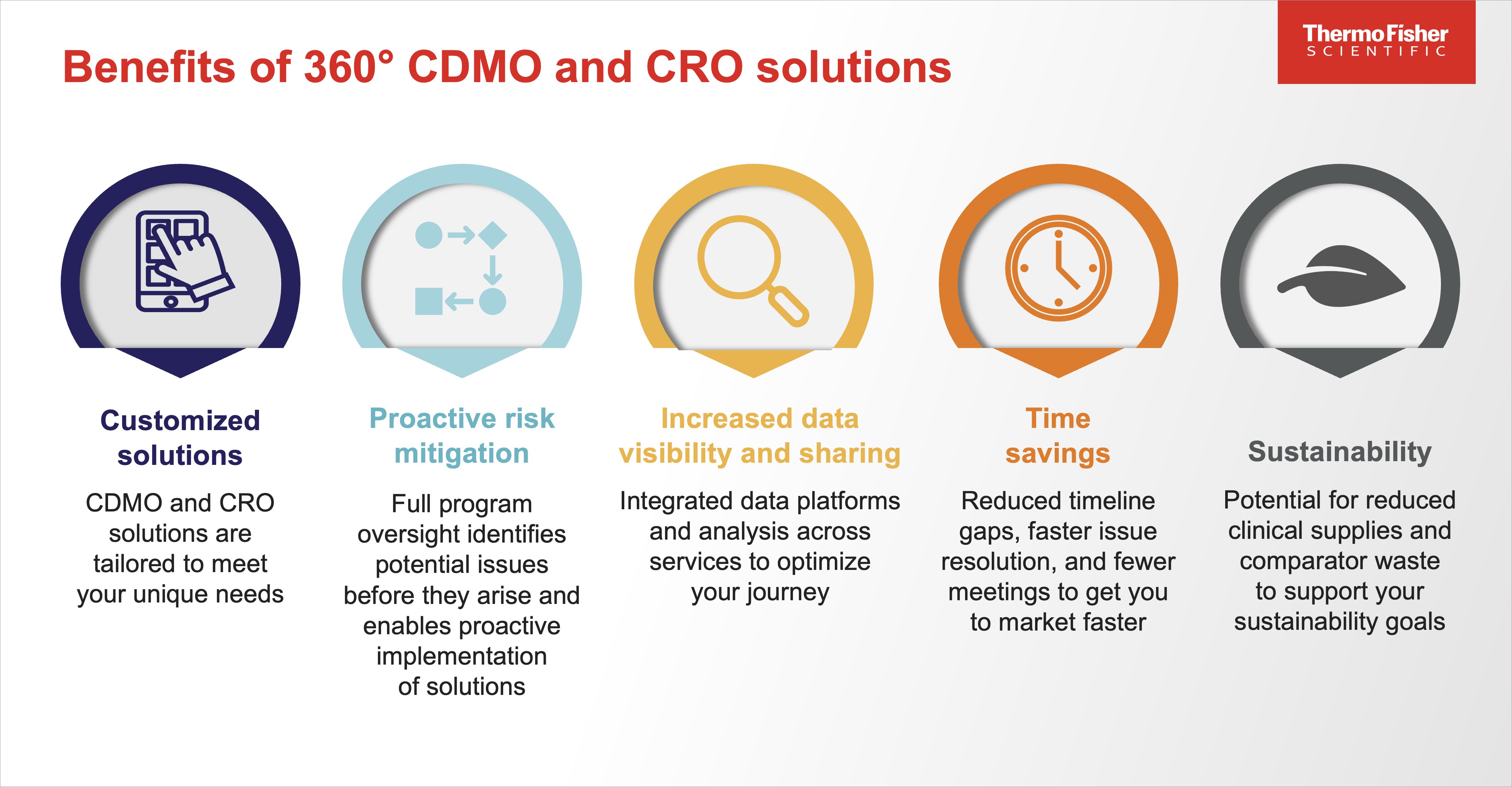
Expert perspective: Inside Accelerator™ Drug Development, 360° CDMO and CRO solution
Meet Thermo Fisher Scientific’s subject matter experts as they share insights, experience, and guidance to help biotech and pharma companies navigate every stage of drug development.
Industry Perspectives
What “one team” really means in drug development
Discover why a true one team approach in drug development improves collaboration, streamlines decision-making, and reduces complexity across programs.
Event
BIO International Convention 2026
Visit us at BIO 2026 to discover how we can support your biologics program—from discovery to development to IND and beyond.
White paper
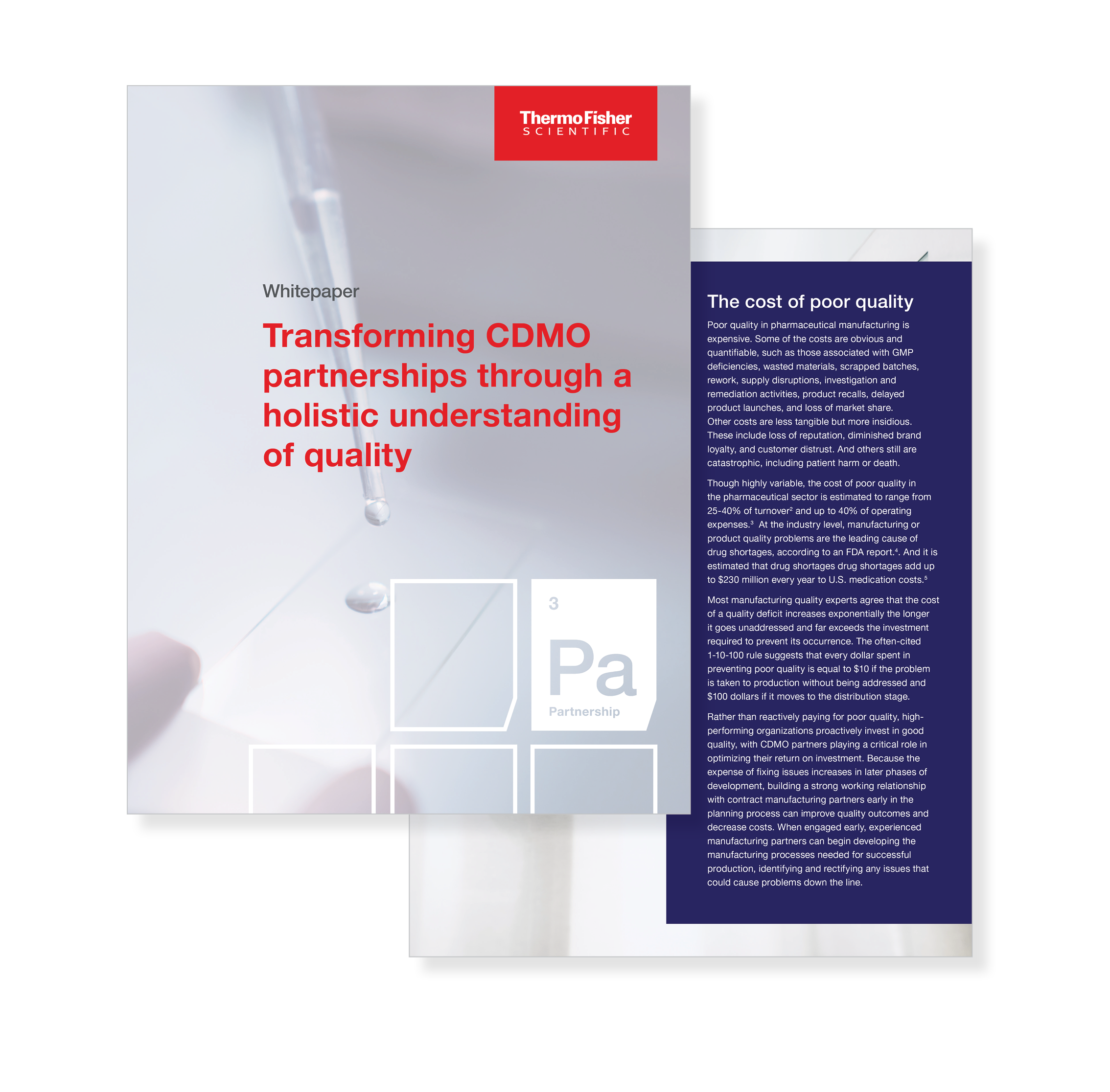
Transforming CDMO partnerships through a holistic understanding of quality
Get an in-depth look into key indicators of CDMO quality, with tools and best practices to drive continuous improvement, strengthen collaboration, and ultimately cultivate trust.
Whitepaper
Reshaping global value: Strategies for chinese innovative drugs to win in the global market
Explore the trends, challenges, and strategic considerations shaping the global expansion of Chinese innovative drugs. Learn how leading organizations are building the clinical, regulatory, manufacturing, and commercialization capabilities needed to compete worldwide.
Industry Perspectives
The new operational reality of drug development
What causes development programs to lose momentum? Often it's not the science. Explore the operational factors that increasingly shape timelines, risk, and execution success.
Webinar
One team. One plan. Total oversight. An integrated CDMO–CRO model for coordinated execution
This on-demand webinar showcases how an integrated CDMO–CRO model supports drug development programs in practice across development, manufacturing, and clinical supply.
Industry Perspectives
Drug development speed: Outcome of early-phase decisions
Discover how early drug development decisions shape how quickly complex programs move in later phases.
Article
AI and the shift toward more integrated, efficient drug development
Explore how artificial intelligence is fundamentally changing biopharmaceutical development and how CDMO and CRO integration can act as an enabler for this future-forward technology.
In a futuristic laboratory, a scientist with a pipette analyzes a colored liquid to extract the DNA and molecules in the test tubes. Concept research,biochemistry,immersive technology
Industry Perspectives
What Drives Speed in Complex Drug Development?
Learn what truly drives speed in complex drug development—why coordination, not effort, determines timelines, risk, and execution success.
White paper
Coordinated drug development as an execution framework
Learn how coordinated governance and integrated execution support continuity across clinical research, development, manufacturing, and supply.
White paper
Where innovation and investment reduce drug development risk
Explore how investment strategies are applied in practice and how they support program execution across development, manufacturing, and clinical supply.
Fact sheet
Thermo Fisher Financial Solutions: Investing in innovative drug development
This fact sheet explores our “Thermo Fisher Financial Solutions” program and how it helps biotech and pharma drug developers speed up their journeys from molecule to medicine to market.
Whitepaper
Rethinking drug development for early-phase biotech companies
This white paper examines how biotechnology companies can reframe early drug development decisions to reduce the risk of delays, rework, and regulatory setbacks as their programs advance.
Whitepaper
Quality as a strategic differentiator in drug development
Explore how quality systems, digital insight, and operational discipline help maintain consistent execution from early drug development through commercial supply.
Blog post
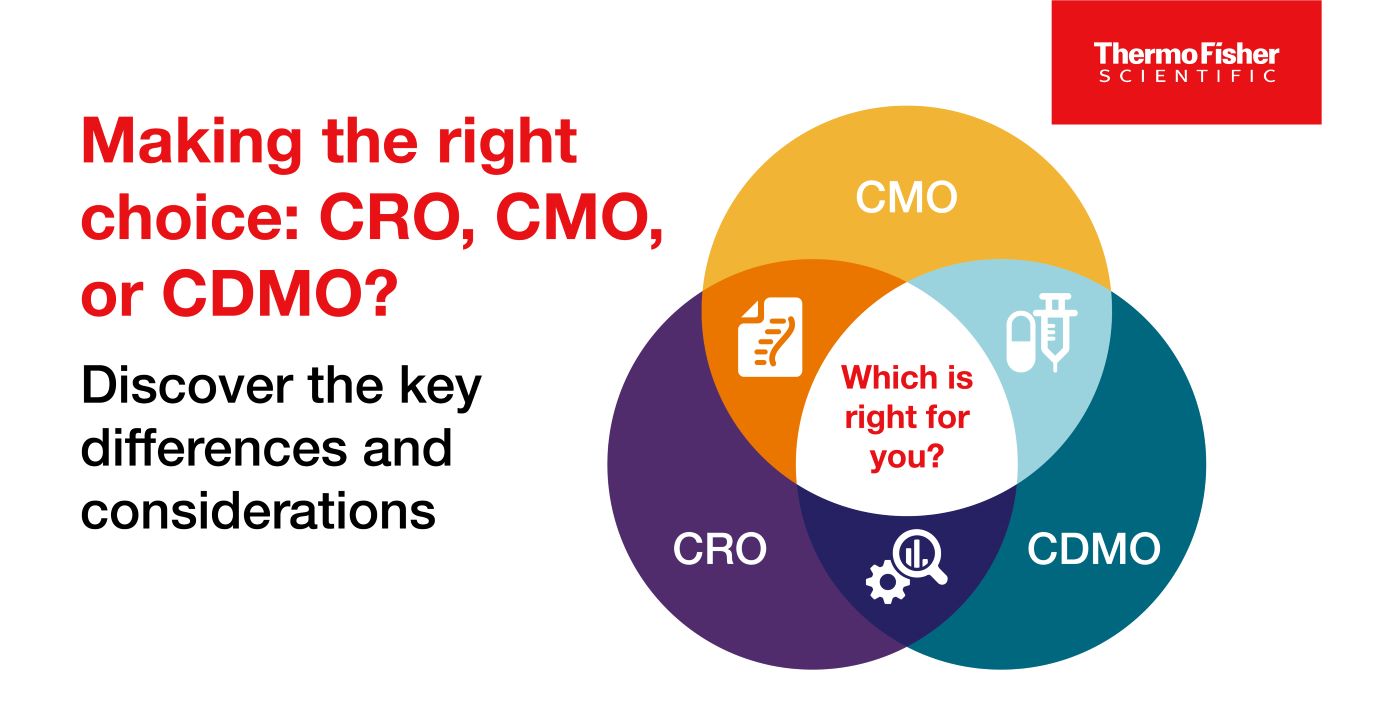
CROs vs CMOs, and CDMOs: What’s the difference between the three?
CROs, CMOs, and CDMOs all help biotechnology and pharmaceutical companies with drug development and manufacturing, but what’s the difference between the three?
Whitepaper
Flexibility in Drug Development
Examine how flexibility shows up across drug development, manufacturing and clinical supply, and how these flexible systems help adapt to changing requirements.
Blog post
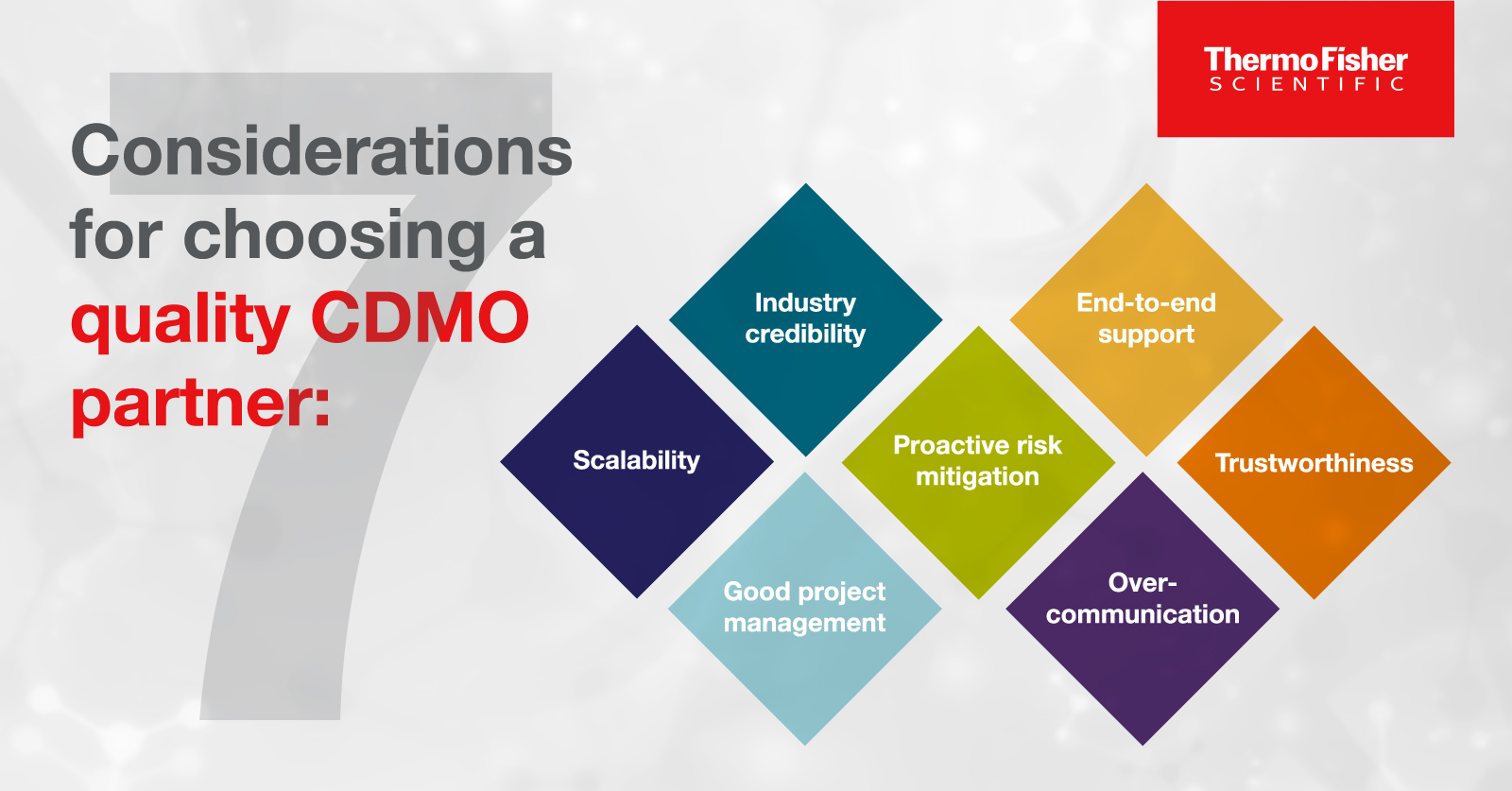
What is a CDMO and what to look for in a partner
Learn how CDMOs (contract development and manufacturing organizations) work with pharma companies, and the top considerations companies have when choosing a CDMO partner.
Blog post
Real-World Application of CDMO CRO Integration
Learn how Tufts CSDD benchmark data translates into integrated CDMO–CRO execution by reducing handoffs, silos, and development delays.
Whitepaper
Maximizing pipeline value through integrated drug development: How the Accelerator™ Drug Development model enhances eNPV
This white paper reveals how a fully integrated model uniting CDMO and CRO services can significantly improve expected net present value (eNPV) and speed up drug development.
Webinar
Accelerate with confidence: Research-based insights to guide CDMO–CRO partnership decisions
This webinar shares key findings from a Tufts study that quantifies both the financial returns and risk-adjusted value of working with an integrated CDMO, CRO, and clinical supply partner.
Blog post
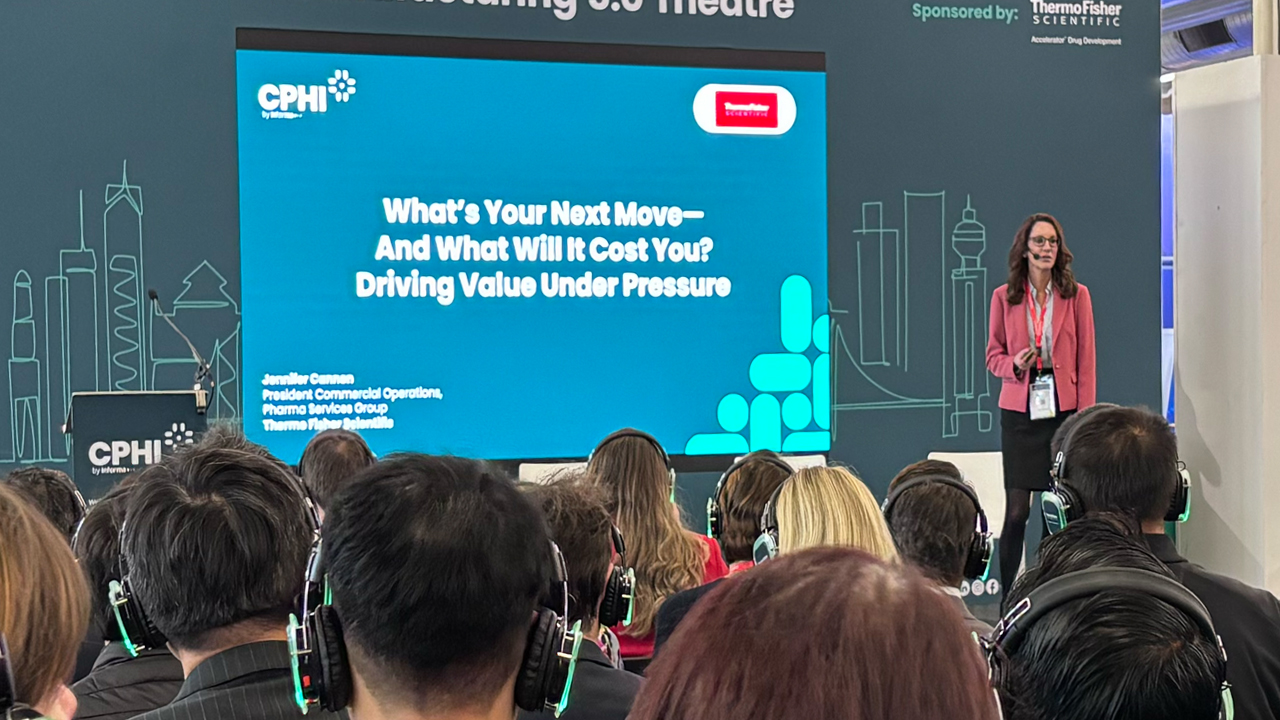
CPHI Frankfurt: A leader’s perspective on how strategic integration drives progress in drug development
In a presentation at CPHI Frankfurt 2025, Jennifer Cannon, President of Commercial Operations at Thermo Fisher Scientific, challenged the audience to rethink how value is created in today’s high-pressure biotech environment.
Infographic
Unlocking ROI and Efficiency in Drug Development
A data-driven look at an integrated approach to drug development.
Blog post
Early-stage biotech: The wrong outsourcing strategy costs more than time
Explore expert perspective on what regulatory challenges are faced in ancillary management, and how to best minimize risk and adapt to evolving requirements.
Brochure
PDS Steriles Capabilities: US- & EU-based facilities
State-of-the-art steriles PDS services
Video
U.S. Investment: Global Complexity Demands Local Resilience
See how Thermo Fisher Scientific is making investments in our U.S. manufacturing network to help customers meet the challenges of shifting global trade dynamics.
Webinar
Stop outsourcing, start partnering: Redefining value in global clinical trial execution
11 studies. 51 countries. One team. Learn how reframing the CDMO as a value-driving partner helped NewAmsterdam Pharma’s lean team achieve remarkable results.
Blog post
Accelerate drug development by embracing an integrated approach
Discover the benefits of embracing an integrated CDMO and CRO approach that combines drug substance, drug product, clinical manufacturing, clinical research, and clinical supply chain management.
Case Study
Accelerator ™ Drug Development: Collaborative timeline management drives speed and simplicity in global vaccine trial
Learn how Thermo Fisher Scientific’s Accelerator™ Drug Development Framework helped a global biopharma company align timelines, resolve quality agreement discrepancies, and streamline execution of a high-stakes vaccine trial.
Case Study
Accelerator™ Drug Development: Integrated governance drives execution across global clinical research program
This case study highlights how one biopharma sponsor leveraged Accelerator™ Drug Development to regain control of its clinical research program and deliver results across their portfolio.
Case Study
Accelerator™ Drug Development: Streamlining preclinical pathways for a faster transition to First-in-Human trials
Download the case study to see how one biotech company saved $1M and shortened development timelines by 12 months with Thermo Fisher Scientific’s integrated CDMO and CRO solutions.

Whitepaper
Value reimagined: Unlocking ROI and efficiency in drug development
New research demonstrates how aligning manufacturing, clinical research, and supply services under a single partner can reduce complexity, streamline execution, and unlock significant ROI in drug development.
Blog post
High-potency OSD development solutions: View from Bourgoin.
Explore examples of how biotech and pharma companies leverage our strategically located European facility to solve high-potency API and OSD challenges.
Discover expert insights into the critical steps, challenges, and innovations in biologics manufacturing from preclinical development to clinical manufacturing.
How Clinical Packaging and Labeling Innovations Drive Value
Effective clinical packaging and labeling drive value by ensuring compliance, protecting product integrity, and improving trial efficiency. A strategic approach helps biotech sponsors mitigate risk, adapt to trial demands, and optimize cost, speed, and reliability.
Blog post
Understanding large molecule drugs
This blog provides a deep dive into large molecule drugs, or biologics, exploring their key characteristics, advantages and challenges, and future in the pharmaceutical industry.
Partnership-driven value in drug development: Compelling insights from new research
New research by the Tufts Center for the Study of Drug Development analyzed the impact of integrated service models on oncology drug programs and showed significant reductions in development timelines across clinical phases while improving cost efficiency.
Infographic
Accelerating time to market with integrated CRO/CDMO services
Our new infographic explores the benefits of working with an end-to-end, integrated CRO/CDMO vendor on the complex drug development journey.
Webinar
Maximizing value across drug development: Embracing a new CDMO and CRO partnership approach
Discover how integrating CDMO and CRO services and solutions under one comprehensive model can improve efficiency, reduce timelines, and help deliver high-quality therapies to patients faster.
Blog post
Redefining acceleration of the drug development journey
Learn how Thermo Fisher Scientific's Accelerator™ Drug Development brings CDMO and CRO solutions under one roof to help get treatments to patients faster.
Blog post
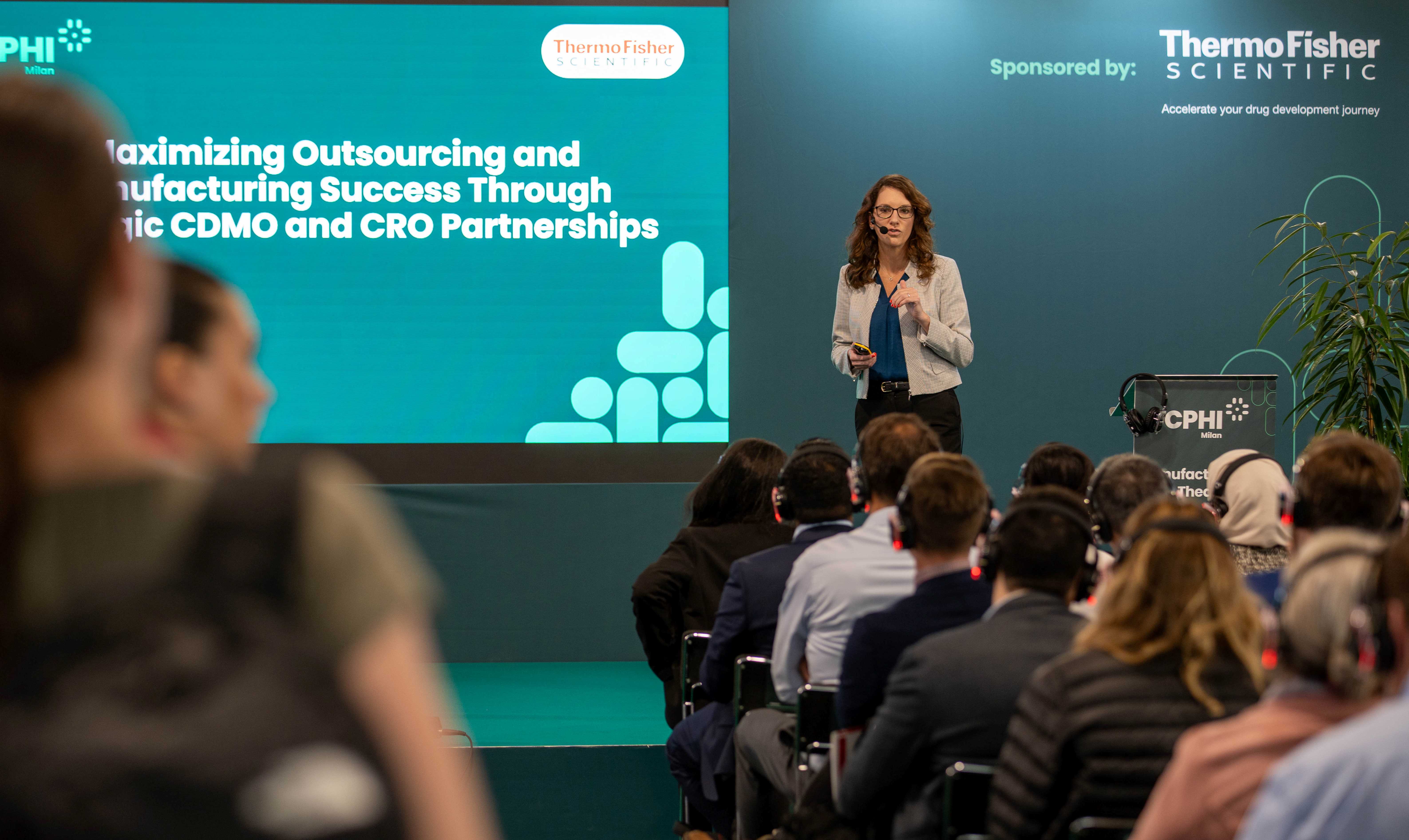
Insights from CPHI 2024: Accelerating drug development through strategic CDMO and CRO partnerships
Discover Jennifer Cannon’s insights from CPHI Milan 2024, including how combining outsourced CDMO and CRO services can help streamline development and reduce costs.
The critical role of tech transfer and the value of strategic partnerships
In pharmaceutical manufacturing, tech transfer is the systematic transfer of knowledge, processes, and technologies from the development phase to commercial manufacturing and across production sites. Learn more.
Video
Mike Pearson’s story: Leveraging an integrated network for IND filing
Learn how the team at our Bend, Oregon site used just-in-time manufacturing to meet a client’s end-of year IND filing schedule.
Tech transfer blog, Post 1, Social copy
Blog post
Tech transfer, part 1: Navigating uncertainty in pharmaceutical manufacturing: The critical role of technology transfer
Efficient technology transfer in pharmaceutical manufacturing helps maintain product quality, protect intellectual property, manage costs, and scale operations, thereby ensuring that companies can respond effectively to new opportunities or challenges, maintain competitive advantage, and ensure uninterrupted supply of medications to patients.
Webinar
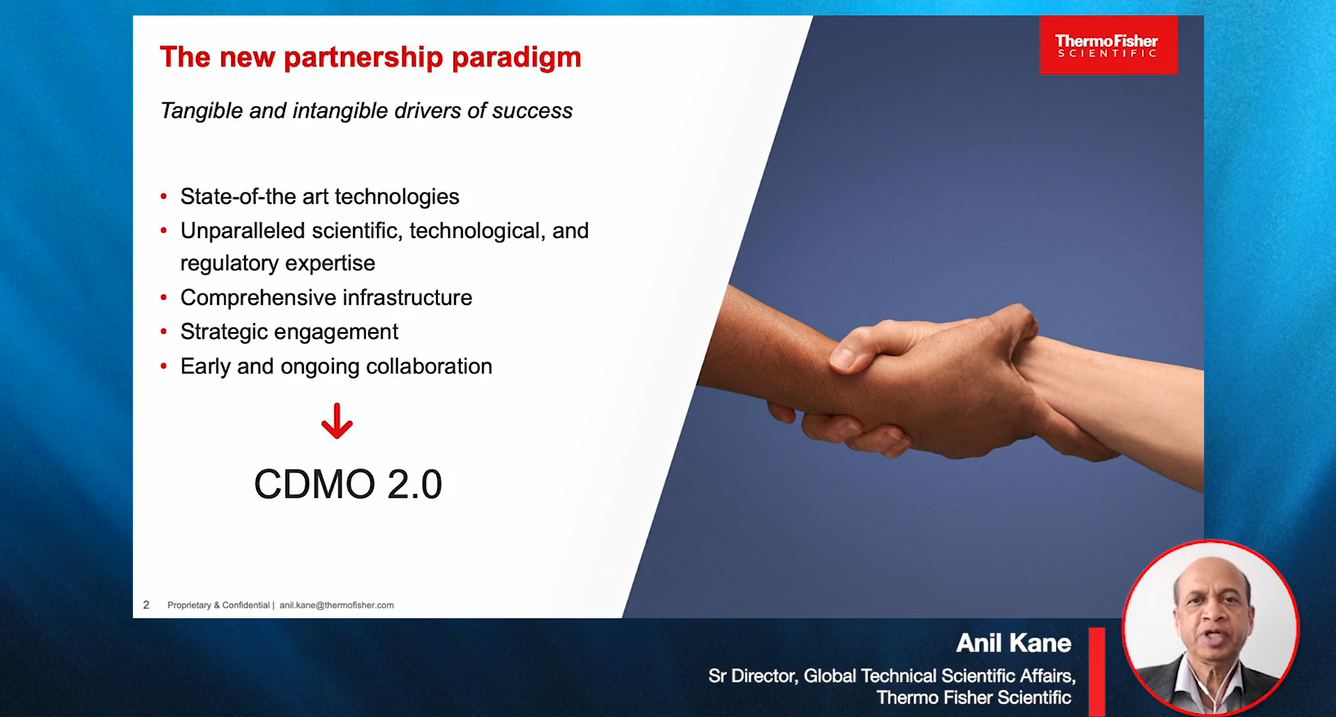
CDMO 2.0: Uncovering the missing element in next-generations pharma partnerships
This webinar explores how CDMO supply chains are transforming into value chains, and discusses the increasing importance of CRO/CDMO collaborations in advancing the pharmaceutical industry.
Webinar
CDMO 2.0: Uncovering the missing element in next-generation pharma partnerships
This webinar explores the next generation of CDMO partnerships and discusses how these strategic collaborations are set to transform the pharmaceutical landscape and drug development.
CDMO quality harmonization: Ensuring consistency, reliability, and supply chain resilience
The harmonization of quality standards, procedures, and practices across sites is crucial for enhancing the resilience and efficiency of the entire supply chain and is a key driver in accelerating market entry for safe, effective therapies.
The quality lever blog_ver2c
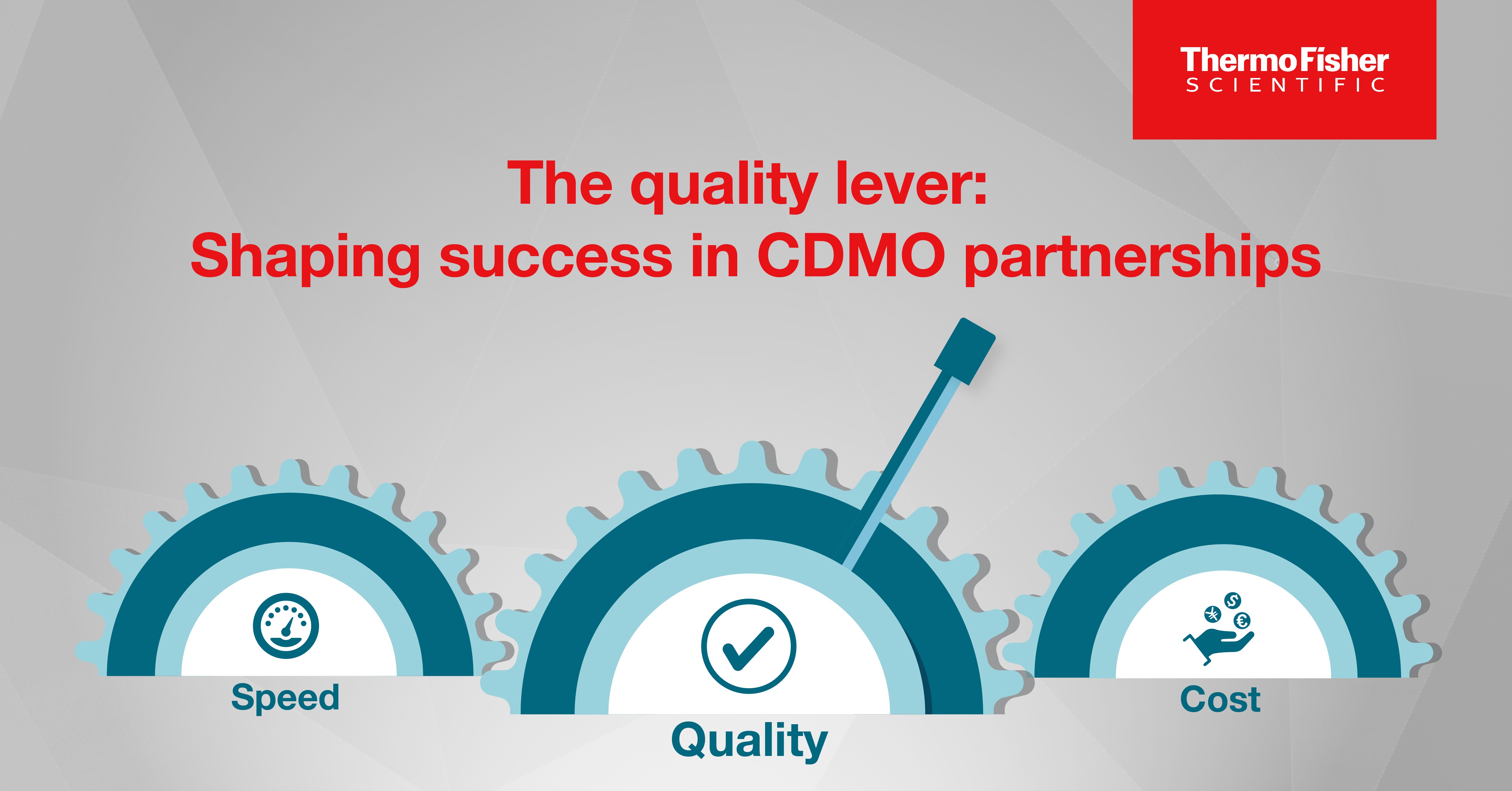
The quality lever: Shaping success in CDMO partnerships
Compromising on quality can lead to detrimental impacts on both speed and cost, ultimately affecting the successful development and marketing of new therapies.
Blog post
CDMO 2.0: Three pharma industry trends for 2024 and beyond
Discover three major trends expected in the pharma industry, including turning to flexible manufacturing, embracing digital enablement, and the need for CDMOs deliver transformational value.
Fact sheet
Translational Services
Through Translational Research Services, our interdisciplinary team of scientific experts offer end-to-end support to advanced therapy developers, to generate relevant materials and help ensure a seamless transition from discovery to clinical phase manufacturing.
Blog post
Key Insights from CPHI Barcelona 2023
As the largest global event for pharmaceutical supply chain companies, CPHI is a microcosm of the pharmaceutical manufacturing industry. At this year’s event, the rapidly shifting pharma landscape contributed to an undercurrent of urgency. Following are some of the key takeaways.
Blog post
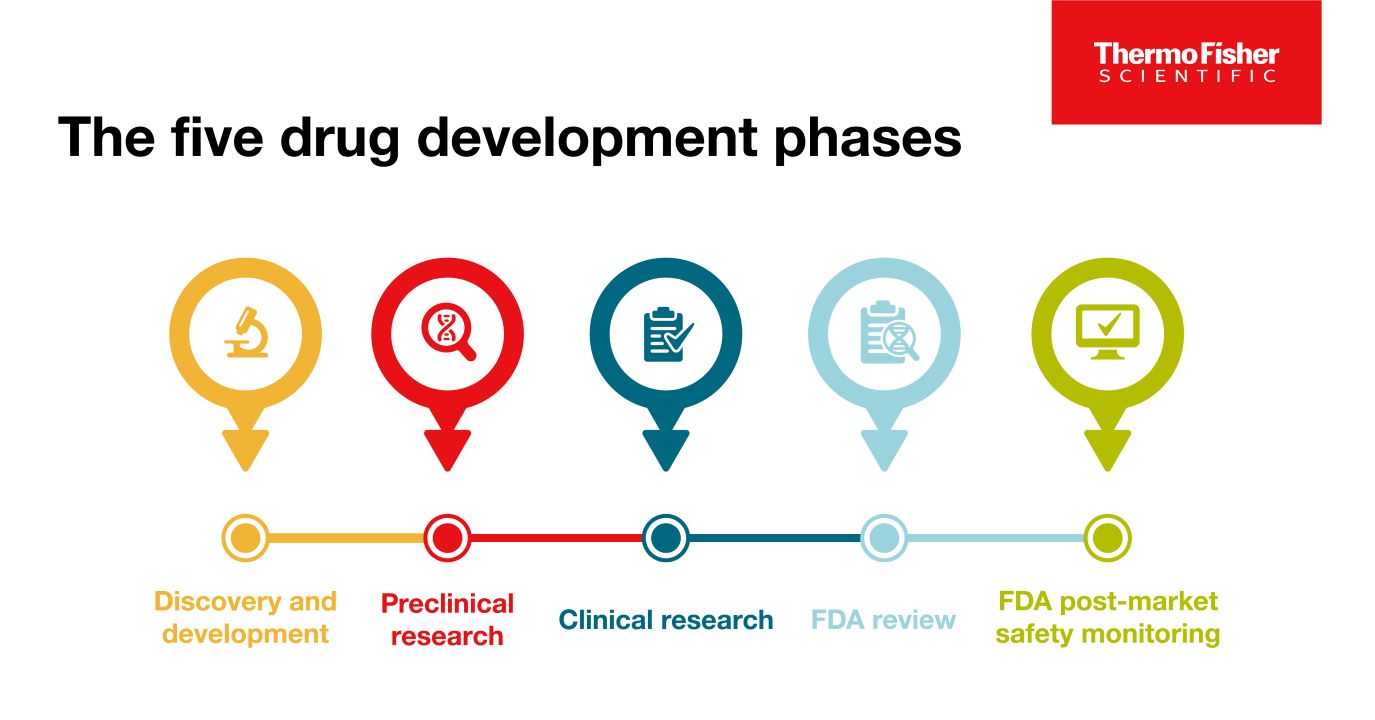
The 5 drug development phases
To be deemed a “success,” a new drug must make it through five specific phases: 1) discovery and development, 2) preclinical research, 3) clinical research, 4) FDA review, and 5) safety monitoring.
Blog post
Enter the CRDMO: Reshaping drug development through CRO/CDMO integration
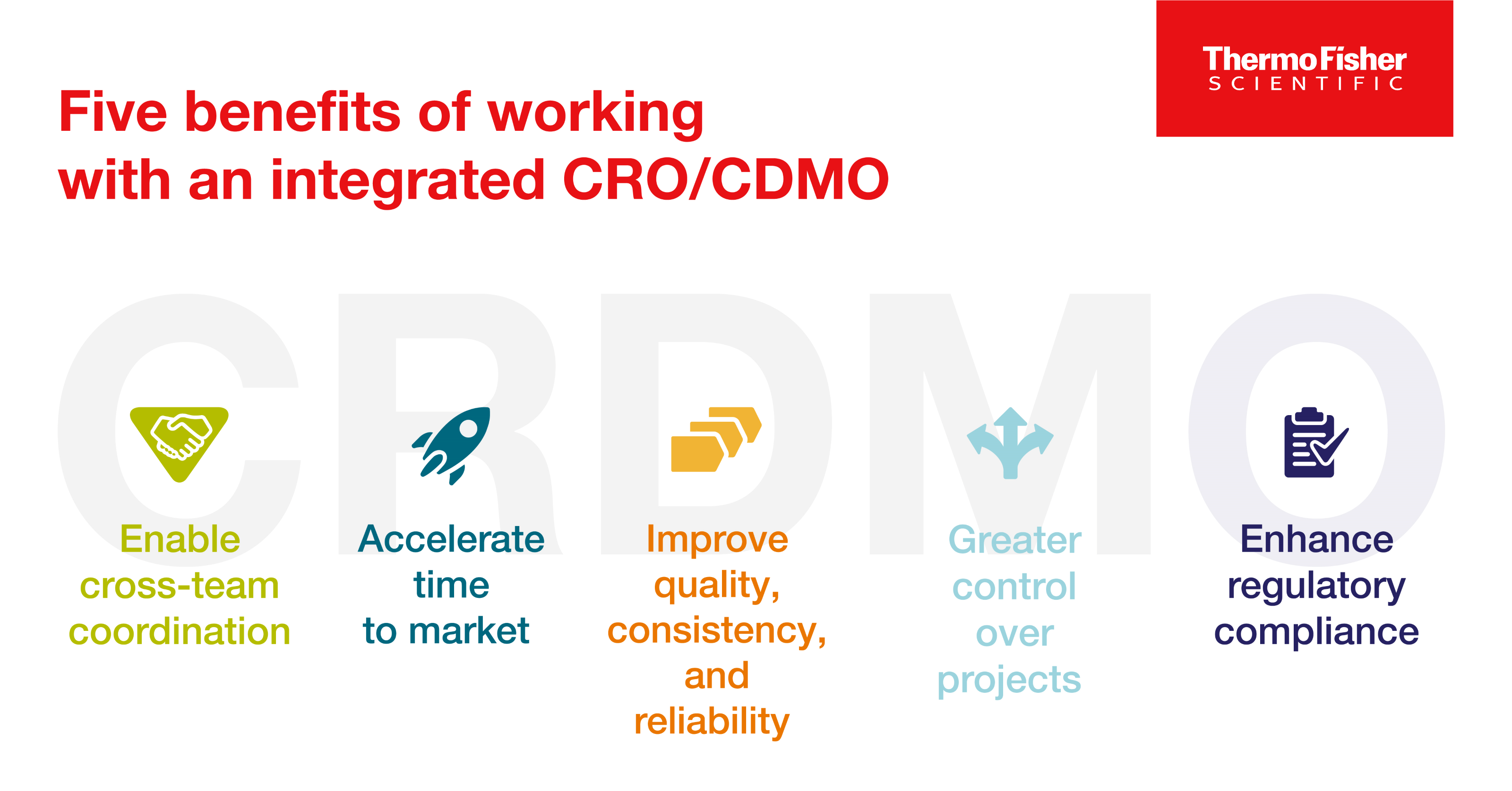
CRDMOs, or integrated contract research, development, and manufacturing organizations, are a trend to watch. Discover five benefits of partnering with one.
Infographic
Integrated drug development program management
Explore a visual framework on how coordinated execution supports continuity, visibility, and more predictable program progression.
Blog post
Enabling a digital culture through integrated business processes
In contrast to a physical work environment, where stability and experience are key, a digital business environment focuses on innovation and connectivity. Learn more.
Global community, conceptual artwork.
Infographic
CDMO checklist to launch your molecule globally
Preparing to take your drug into the global market? You’ll need to make sure your CDMO has what it takes to successfully navigate the global regulatory space with speed, security, and supply safeguards. Use this quick list as a reference when evaluating your options.
eBook
Decentralized clinical trials in the EU - Strategies and digital solutions for navigating the regulatory landscape
Download this eBook to learn how to navigate the complexity of the regulatory landscape in the EU with the right guidance and resources.
Whitepaper
Expediting early-phase development of small molecules: An integrated approach
In this whitepaper, we discuss key strategies for efficiently advancing small molecules from API to pre-clinical data and clinical supply.
eBook
Protecting tomorrow: Supporting pharmaceutical and biotech industries to build a sustainable future
Learn how Thermo Fisher is meeting its environmental sustainability goals, and how we work in partnership with the pharma and biotech communities on shared environmental sustainability goals.
Whitepaper
The changing landscape of oncology drug development: Bringing novel lifesaving therapies to patients
Oncology is the fastest-growing, most active sector of drug development. Matching drug products to clinical and commercial needs requires scientific and technological innovation.
Webinar
An optimized approach to drug development
Take months off the development timelines of your large and small molecule discoveries.
Fact sheet
Global steriles investment & innovation
The medicines we help develop and deliver for our customers impact one million patients each day. With an increasing demand for our services, expertise and capabilities, comes a commitment to continuously expand our products and services.
Webinar
China: Opportunities & high growth potential for global and domestic pharma
How pharma companies in China can leverage the experience of the global market
Webinar
Why Did Thermo Fisher Scientific Acquire Patheon?
In August 2017, Thermo Fisher Scientific completed the acquisition of Patheon, creating the world’s most comprehensive and sophisticated end-to-end CDMO partner.
eBook
There May Be Dragons: Mapping 7 New & Emerging Pharma Development Risks
You have to think about things like technology transfers, shipping and logistics, as well as the increasingly complicated regulatory expectations across countries.
Case study
We work together to meet global demand for COVID-19 vaccines
Learn what led to Thermo Fisher Scientific looking for a bespoke packaging solution, one that enabled work to be carried out within the low temperatures and specific timescales needed
Brochure
Biopharma Capabilities Overview
Learn more about our integrated offering for biopharma organizations. Built on a foundation of quality systems and commitment to continuous improvement, we help you achieve success at every milestone.
Brochure
Developing a CMC and regulatory roadmap for your molecule’s lifecycle
Getting your strategy right from the start of your molecule’s journey can help save time and money as you advance through each phase and proceed to commercialization.
Brochure
Pharma Services EMEA network, integrated network from molecule to medicine
Our objective is to help speed your molecule through early phase trials and prepare you for commercial success, faster. In this brochure, find out more about our dedication and...
Brochure
Quick to Care™ program
Discover how the Quick to Care™ program can help take months off the development timelines of your large and small molecule discoveries. The program streamlines your drug substance and...

Video
Fisher Clinical Services & Patheon: Better Together
Leon Wyszkowski, President, Commercial Operations, discusses the value of Patheon and Fisher Clinical Services joining together to provide integrated solutions for our clients.
Video
How Embracing Flexibility Creates Success for All
Learn how Whitney took on the challenge of creating more flexibility within existing rigid processes to better meet the needs of her client. Together, they came up with a solution to optimize critical paths forward to expedite getting life-saving therapies to the patients who need them.
Webinar
Accelerating innovative therapies to patients in a post pandemic world
Learn from industry experts and esteemed guests on hot topics including: From research to clinic: the path to success for cell therapy companies Evaluating options for outsourcing discovery research
Fact sheet
CMO Scorecard
Find out how we helped clients earn as many NDA approvals as the next three leading CMOs combined.
Infographic
Maintaining the Cold Chain in European Distribution
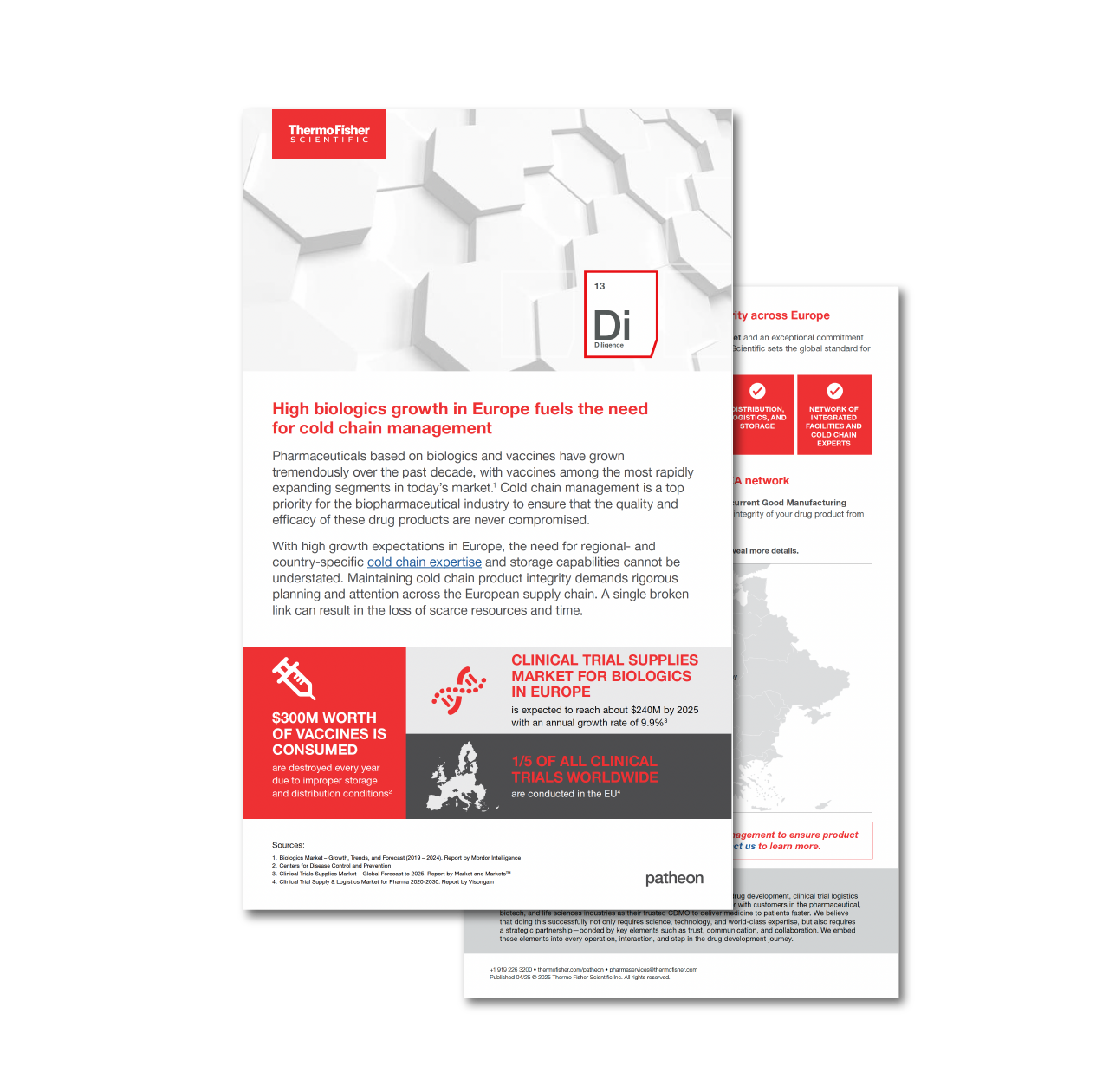
Learn top tips for maintaining cold chain integrity across the European supply chain with the growth of biologics and vaccines in the biopharma sector.
Infographic
Made with proof & purpose
Made with proof & purpose Your molecule has the potential to change lives and shape the future.
Collaborative partnerships: Case studies of success
Fact sheet
Global Site Network: End-to-End Pharma Services
Learn more about our fully integrated global site network that can support your molecule from development to commercialization.
Fact sheet
OnTheGo℠ Suite of Services
Discover how Patheon Logistics’ PDMA-compliant suite of OnTheGo mobile and web apps optimize sales representative productivity and enhance practitioner convenience and service.
Fact sheet
mysupply Platform: An End-to-End Digital Supply Chain Platform
From development to launch, pharma products navigate a dynamic global supply chain with potential changes and delays
Translational Services
Through Translational Research Services, our interdisciplinary team of scientific experts offer end-to-end support to advanced therapy developers, to generate relevant materials and help ensure a seamless transition from discovery to clinical phase manufacturing.
Fact sheet
Patheon pharma services: Your truly integrated partner for drug development
Advance your discovery from molecule to medicine with our industry-leading, end-to-end pharma services capabilities to simplify your supply chain. Learn more about how we can partner with you on your drug development journey.
Fact sheet
Quick to Care™: Integrated Drug Development and Clinical Services for New and Emerging Pharma
Take months off the development timelines of your large and small molecule discoveries. With Quick to Care™ you can combine your drug substance and drug product development, demand planning and clinical trial supply execution into a single customized solution. Learn more.
Fact sheet
Quick to Clinic<sup>TM</sup> for Oral Solid Dose
Only 12 weeks from receipt of your API, Patheon Quick to Clinic™ can deliver bulk clinical trial materials for first-in-human studies. Learn how.
CDMO + CRO advantage: Supply chain to value chains
Explore how CDMO supply chains are transforming into value chains, and the increasing importance of CRO/CDMO collaborations in advancing the pharmaceutical industry.
Video
API to Clinical Trial Distribution: The Value of Patheon’s Integrated Offering
From preclinical to clinical trial distribution to commercial manufacturing, we can help you through the entire process.